Featured Rescue Response
Five Planes, Twelve Dogs, One Lifesaving Day
When Los Angeles shelters needed room for animals displaced by the January 2025 wildfires, Flying Tails assembled a volunteer air fleet and carried adoptable dogs north to safety.
Wildfire response · Van Nuys, CA → Northern California and Reno
The story
A Shelter Crisis Behind the Fire Lines
The devastating Los Angeles wildfires of January 2025 created two emergencies at once. Families were evacuating, pets were becoming separated from their people, and local shelters needed immediate room to receive animals coming out of affected neighborhoods.
Flying Tails could help create that room. The dogs selected for the flight were already in Los Angeles shelters and available for adoption before the fires. Moving them to shelters with capacity elsewhere would open kennels for displaced pets whose families might still be searching for them.
Building an Airlift in Days
Flying Tails founder Ken Wayne coordinated five airplanes and their volunteer crews for the mission. On the morning of January 17, the aircraft departed from Petaluma, Concord, and Hayward and converged at Van Nuys Airport.
The flying was only one part of the operation. Pets Lifeline worked with Los Angeles City Animal Services, Best Friends in Los Angeles, the Humane Society of Sonoma County, North Bay Animal Services, Nevada Humane Society, and other receiving partners to match dogs with open shelter space and arrange handoffs on both ends of the route.
Twelve Passengers, Several Destinations
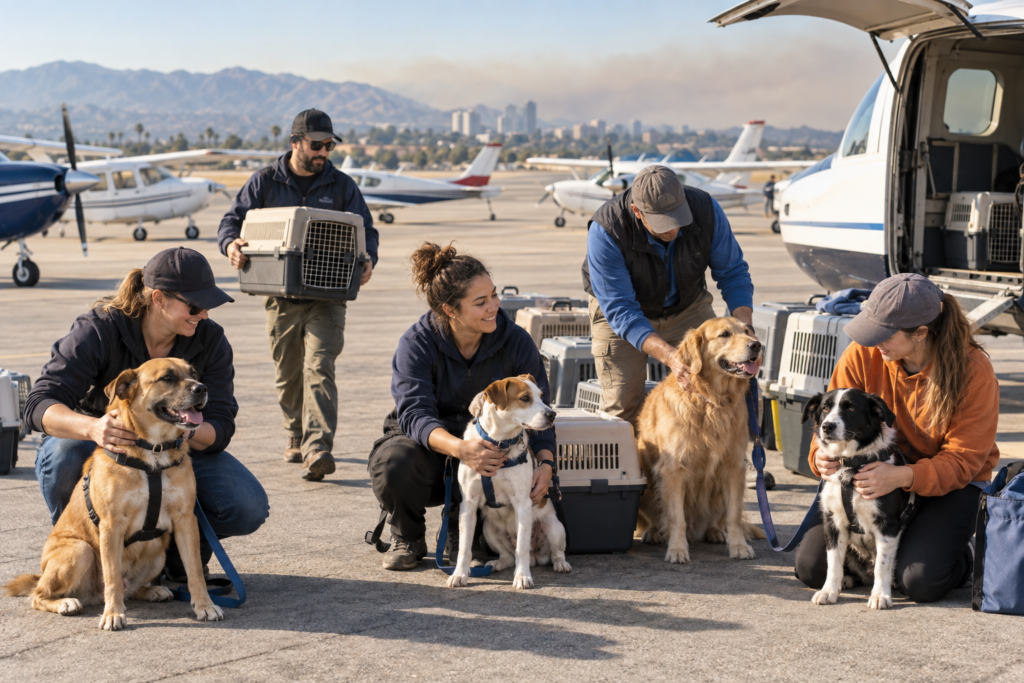
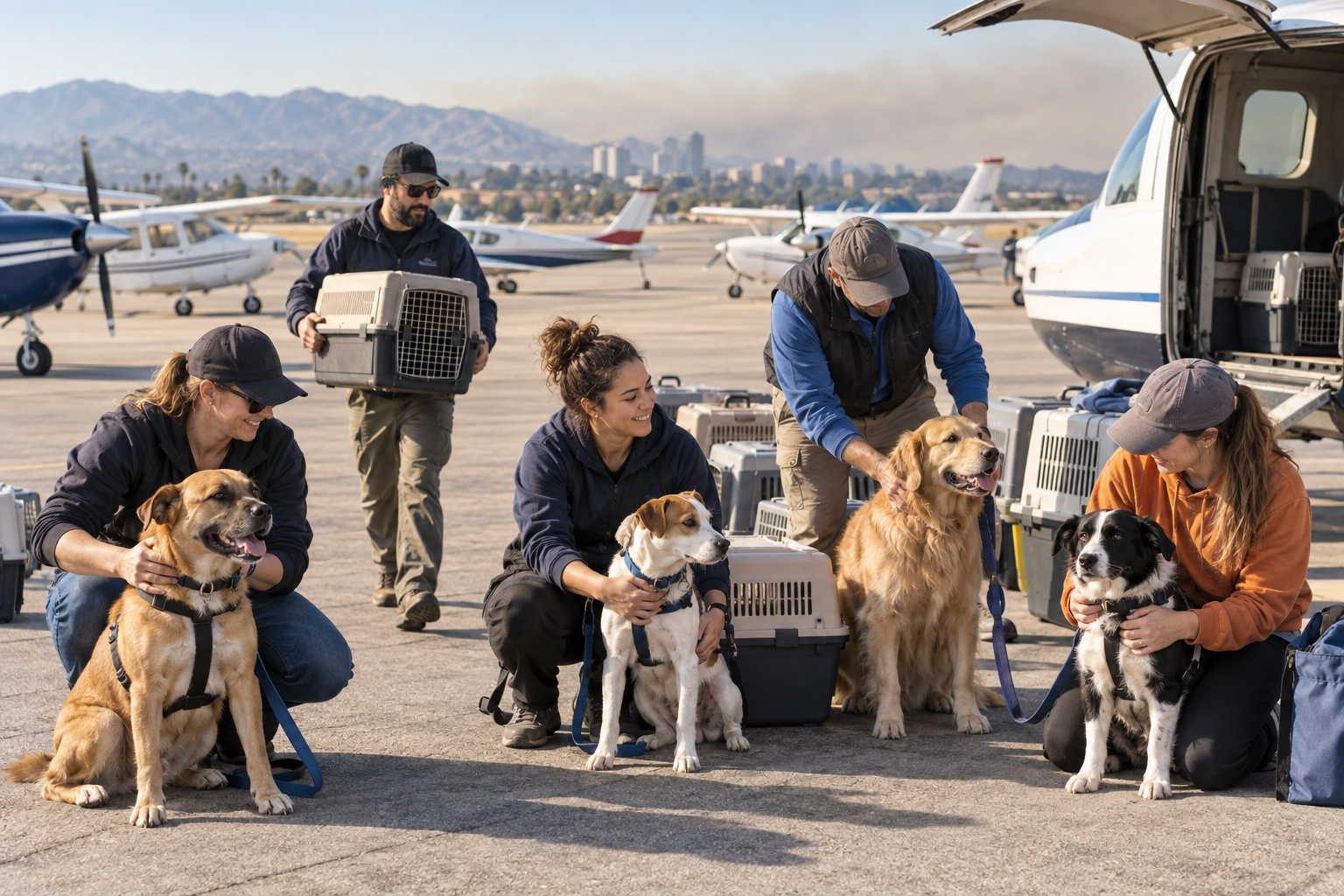
At Van Nuys, shelter teams brought the dogs to the airport and helped divide them among the small aircraft. Many were large dogs, which made weight, cabin space, routing, and safe handling part of the planning for every crew.
By midafternoon, the pilots and dogs were heading toward receiving organizations in Petaluma, Sonoma, Sacramento, and Reno. Flying allowed the team to split into several routes and complete the transfers within the same day, reducing the time the animals spent in transit.
Capacity Is a Form of Rescue
Wildfire response is often described through the animals pulled directly from danger. This mission addressed another essential part of the emergency: shelter capacity. Relocating dogs who were already ready for adoption gave Los Angeles organizations more flexibility to house lost and displaced pets near the communities where their families could find them.
The operation was Flying Tails’ largest coordinated rescue at that point. It also showed what becomes possible when pilots, shelter staff, ground volunteers, and receiving organizations work from a shared plan.
A Model for the Next Emergency
Flying Tails is building a wider network of volunteer pilots who can respond when animals need fast transportation. The wildfire airlift demonstrated the value of that network: several aircraft could gather from different airports, meet one urgent need, and then fan out toward multiple destinations.
For the twelve dogs aboard those flights, the day ended with open kennels and new opportunities. For the pets arriving at crowded Los Angeles shelters, the empty spaces left behind offered something just as important—a safe place to wait for home.